- 작성일 2026.04.01
- 작성자 고려대학교 세종캠퍼스
- 조회수 1
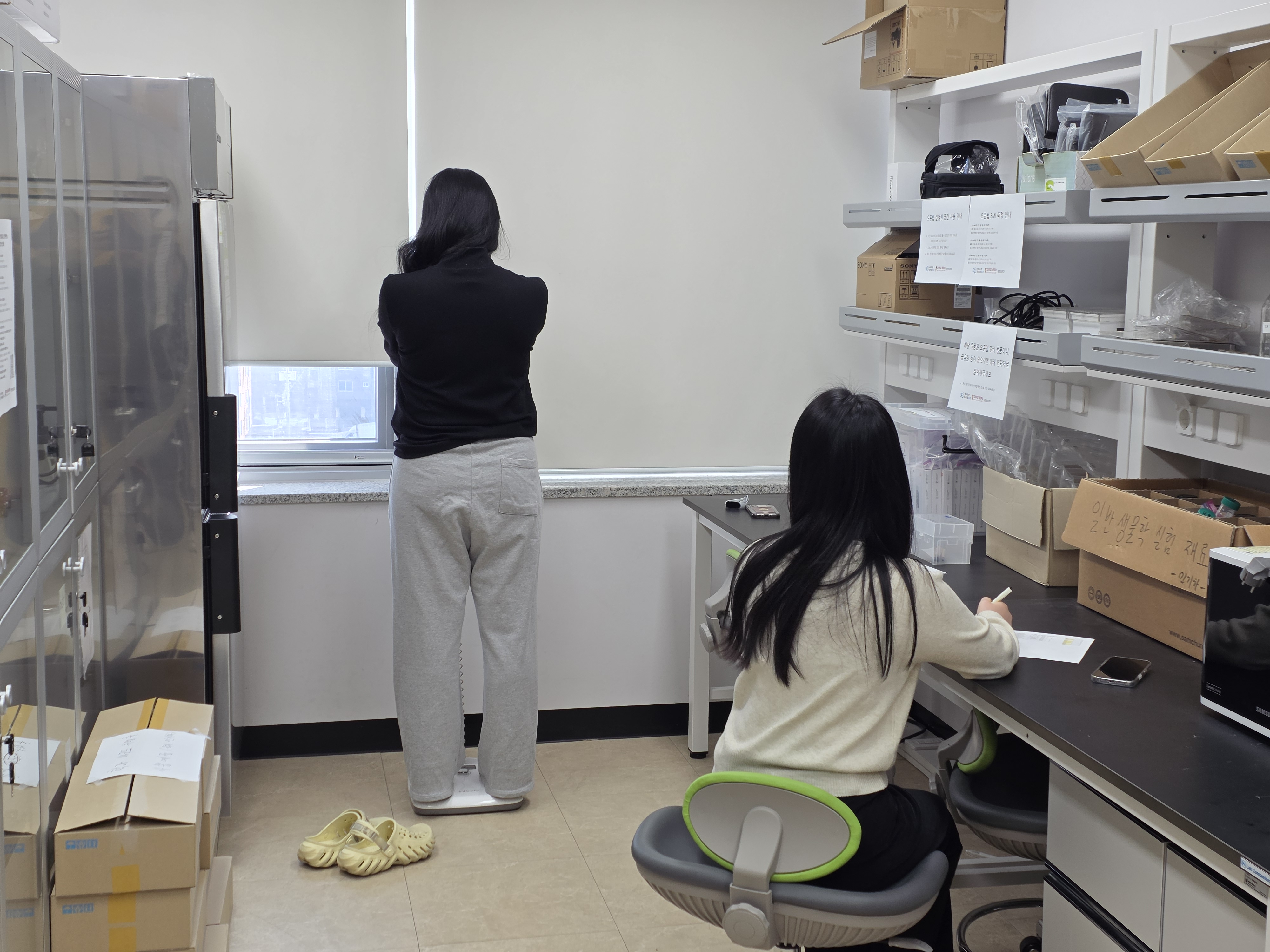
On February 5, the Department of Bioinformatics at Korea University Sejong Campus held the ‘2025/26 Winter Open Lab: Time-Restricted Diet and Sleep Health Program’ at Undergraduate Laboratory of the Research and Business Cooperation Building.
This event was part of the International Capstone Open Lab organized by the Department of Bioinformatics and aimed to explore the potential of the biohealth industry and healthcare systems from both local and global perspectives, while contributing to sustainable international health issues through university education.
Under the guidance of Professors Baek Seungpil and Kim Suji, the open lab involved participation from Research Professor Min Kiha of the Industrial Technology Research Institute, as well as Lee Eunji and Kim Eojin from the Biological Clock-based Anti-Aging Convergence RLRC (Regional-Leading Research Center). A total of 14 undergraduate students participated directly in the program.
Undergraduates actively engaged in all stages of the research as primary experimenters. Students wore wearable devices (Mi Band) to collect individual sleep and activity data, followed a time-restricted diet (intermittent fasting), and observed and recorded changes in their sleep health. This hands-on experience allowed them to go beyond theory-based learning and gain practical exposure to data-driven health management and circadian rhythm research.
The program emphasized educational value by focusing on student-led experiment design, participation, and data recording, going beyond a simple experimental demonstration. Undergraduates were able to analyze their lifestyle and biological data to investigate the correlation between sleep health and dietary patterns, thereby enhancing their practical understanding of the bio health field.
The event was jointly hosted by the BCA2-RLRC and the Korea University Coffee Science Innovation Research Center (CSI-RC).
The Department of Bioinformatics at Korea University Sejong Campus plans to continue expanding educational and research activities through open lab programs, allowing undergraduates to directly engage in cutting-edge bio health research and contribute to addressing health challenges on local and global scales.